
My guide to making the most of your first time in Beijing – 4 day itinerary.
Visiting China’s capital for the first time can be a little stressful.
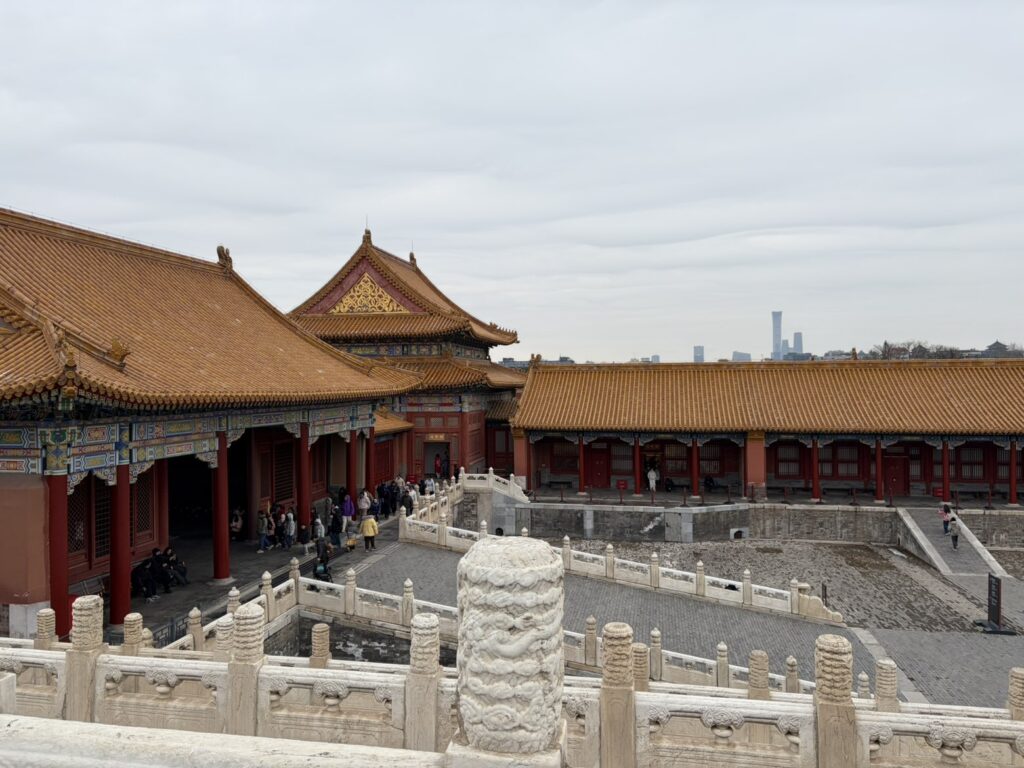
Beijing is undeniably a beautiful city, and a culture rich haven, making it the perfect city stop whether it’s your first time visiting China or your 10th. Home to the stunning Summer Palace and the Temple of Heaven, the incomprehensibly large Forbidden City, and of course the political centre of China: Tiananmen Square. Just a short distance outside of the city, lies the Great Wall of China, a top item on many peoples bucket lists, and a must see whilst visiting Beijing!
But, it is important to remember that Beijing is also the political capital of China. While that brings an array of fascinating, albeit sometimes quite dark history, it means the city is subject to quite heavy monitoring, and there is a strong police presence across the city. Whilst this will likely not affect you outside of potentially having a random passport check, it can be quite intimidating!
China is definitely beginning to open up more to tourists given the recent lifts on Visa restrictions. I honestly believe there is no better time than now to begin exploring this incredible country. Before I landed I was pretty stressed, because you hear a lot of iffy things. I feel there isn’t TOO much information available on what to really expect when you land in China but despite all that, it ended up being one of my favourite places.
Keep reading to discover my tried and tested 4 day itinerary of Beijing, some must know info for before you go, and everything in between…
Must knows before you go
1. Keep your passport on you at all times
This is SO important to remember whilst in China, but ESPECIALLY in Beijing. Firstly, your passport is going to be your ticket to virtually everything – Whether that’s to enter the Summer Palace, or the Great Wall of China. Your tickets will more likely than not be tied to your passport, and you will need them to enter.
But the other reason is random passport checks are not an uncommon thing for foreigners in China. In Beijing especially it’s quite likely you will experience one. I got very lucky and never received one, however we did have someone in our Tiananmen Square tour group who got passport checked that morning. It’s nothing to worry about as long as you keep your passport on you, but it can just be a little intimidating in the moment!
Walking down the streets you will notice police checkpoints on pretty much every corner, if anything it just makes the streets feel a bit safer, but we definitely found it quite strange when we first arrived!
2. Be prepared for a LOT of stares
All across China, if you look foreign, you are more than likely going to receive at least a couple of stares, but honestly nothing prepared me for Beijing…
I kinda assumed that because it’s a major city not too many people would bat an eyelid at us, surely they would be used to foreigners in the capital city? We were very wrong and Beijing was the place that we received the most stares out of anywhere on our 1 month itinerary in China.
The main reason for this is because Beijing is the political centre of China. It’s a place that many people from China’s more remote regions dream of coming to – especially Tiananmen square. Walking around the city and getting on metros you will be subject to a normal amount of stares (by China standards), BUT when visiting Tiananmen square especially, be prepared for everyone and their grandma to be staring, pointing, taking selfies and group pictures with you! It’s great if you ever wanted to experience how celebrities feel for a day … not so great if you’re a bit of an introvert at heart like me!
It’s important to remember that the only reason this happens is because people are genuinely curious and may have gone their whole lives never seeing a foreigner. International tourism within China is still a relatively new thing. More often than not they are just taking photos to remember that moment and show their grandkids because it’s not a very common thing for them!
3. Plan for the weather!!
I knew Beijing was going to be cold, especially because I was visiting in late February, but NOTHING prepared me for just how cold it really was!
My itinerary was planned all around being able to get to Japan for peak cherry blossom season, but that meant I drew the short straw on Beijing, putting it at the start of my trip. I would not recommend visiting Beijing in late February at all – our first day there it SNOWED. We were trying to walk around the Forbidden City and I genuinely felt like I was about to lose a toe!
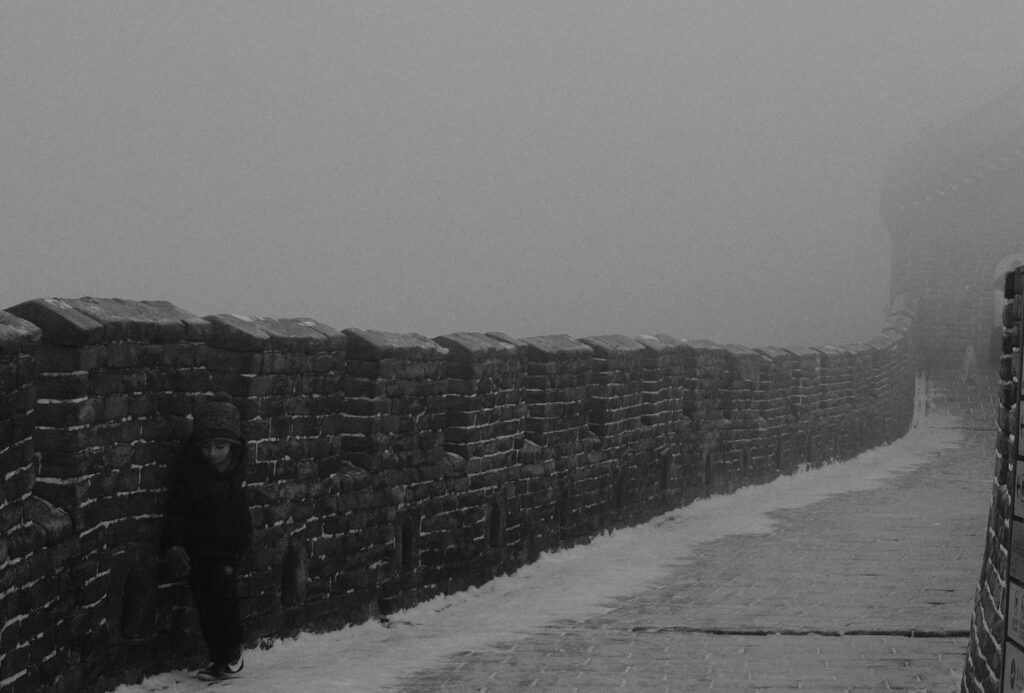
By the time we got to the Great Wall of China, 2 days into our trip, the whole entire thing was frozen to the point where it was more a slip n slide than a path. We had hoped to walk the whole length of the Mutianyu section … we only made it 10 meters to the first watch tower. It was actually impossible to walk on and there were a total of ZERO safety precautions in place.
The highlight was the fact we could also only see about 10 meters in front of our faces so my memories of the Great Wall of China are ice and big bricks (still impressive though)!
I would recommend visiting in either spring (April/May), or Autumn (Mid-September/October). Summer time will be very humid and hot and I have heard it rains A LOT. Winter is very harsh and very cold but if you don’t mind that then it is going to be the cheapest time of year to visit.
If possible you should also try to avoid the major public holidays because it will be EXPENSIVE and very very very busy, bringing me onto my next must know…
4. Chinese public holidays
These are going to be the absolute busiest and arguably worst times to visit China, especially if you have limited time and want to experience all the major tourist attractions.
Chinese New Year – typically falls in late January / early February. The celebrations continue for a few weeks, but by the end it will have calmed down and somewhat returned to normality. I would avoid the first week of Chinese New year at the very least because it will be so busy in the major spots that you’re not going to be able to move. The one good thing is visiting towards the end of the New Year you can still catch the tail end of the celebrations, the cities will still be decorated, but you will avoid the major congestion.
Labour Day – Runs from May 1st to May 5th. This is the kick off of Spring domestic travel, and causes major congestion at national parks and historical sites.
Golden Week – From October 1st to October 7th. Pretty much the whole country is going to have this week of simultaneously and so you can imagine how congested it will get during this period. I visited at the end of Chinese New Year, and pretty much everyone I spoke to said to avoid Golden Week if I returned to China because it gets that busy.
Making Payments
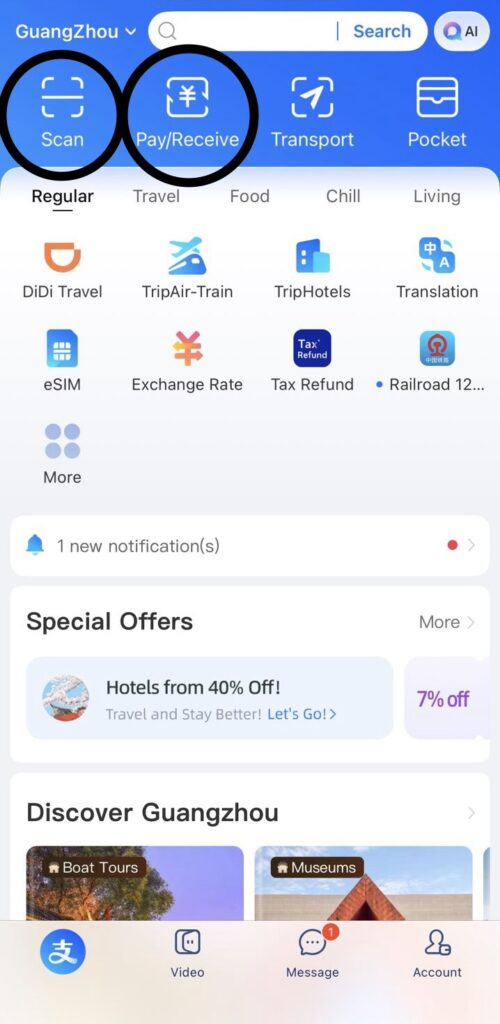
When in China, the most important app that you will need is Alipay.
It is a virtually cashless society, and so pretty much every payment you make will be done via Alipay. Luckily it is a pretty simple and easy to use system once you get the hang of it.
Download and set up the app BEFORE you arrive because this is going to make your life 10x easier. You will likely have to verify your phone number when you sign up and if you are using an eSim whilst travelling, receiving text verifications will not work once you are there. You need to set up a pin password for the app when you sign up, make sure it’s memorable!!!! My silly boyfriend forgot his password and it made life very difficult lol. Make sure you then link your bank card to your Alipay by going to the account section.
Once you’re on the app, you will see this Home Screen (see image), all you really need to know are the ‘scan’ and ‘pay/recieve’ buttons.
When making a payment in a shop simply click on ‘pay/recieve’ at checkout and a QR code will come up. Show this to the cashier, or scan it at the designated point. It will then ask you to confirm the payment amount and put your pin in. You have now successfully completed your first digital payment.
‘Scan’ is used when a cashier/bus driver for example, display THEIR Alipay QR code, and inform YOU of the payment amount to input. This is most often seen when getting on buses, OR when you are shopping at stalls that do not show fixed prices (usually you have to haggle to a fair price).
VPNs
By far the most intimidating aspect of visiting China as a Westerner is the Great Firewall.
You may have never heard of this term before but it is essentially the Chinese Governments technological system which regulates internet usage across China. This is the reason why the majority of Western apps will not work in China, and why China has its own versions.
If you want to be able to use Western apps, social medias, google products, or access any western news outlets whilst in China, the most important things to download are a VPN and an eSim.
I would recommend not just getting one VPN, but getting two. There is a bit of a crack down on VPN usage, and so sometimes they can stop working. I personally used Surfshark and NordVPN, which worked well for me, and I was able to access everything I wanted to for the whole month I was in China for.
An eSim is also essential, I used Airalo, on their Asia 50GB for 90 days plan, which cost me £61.60.
Its worth noting that Chinese WiFi networks do not really work with VPNs active, so if you will likely use a lot more data than you initially think you will!
Before arriving I was convinced that I would essentially lose contact to back home for the duration I was in China, but it turned out to actually be really simple and easy using the VPNs. But, if you are worried it’s worth getting your close family members set up on WeChat before you leave, just in case your VPNs do fall through!
How to make the most of 4 days in Beijing: China’s capital
Now we’ve covered all the nitty gritty boring parts of planning a trip, it’s time for the fun bit. How do you make the most of your 4 day Beijing itinerary?
There’s not necessarily a perfect order in which you should visit the major attractions, but this is generally what I found to work best for me. This itinerary can also be done in 3 days if you are a bit more limited for time, and will just mean exploring at a bit of a faster pace! You will have some spare time after visiting Tiananmen square and the Forbidden city, so this could be used to view the temple of Heaven (they also offer night viewings but this is from the outside only).
Day 1
Your first full day in Beijing, this is your opportunity to get settled in, get to know the city a little bit!
Day 2
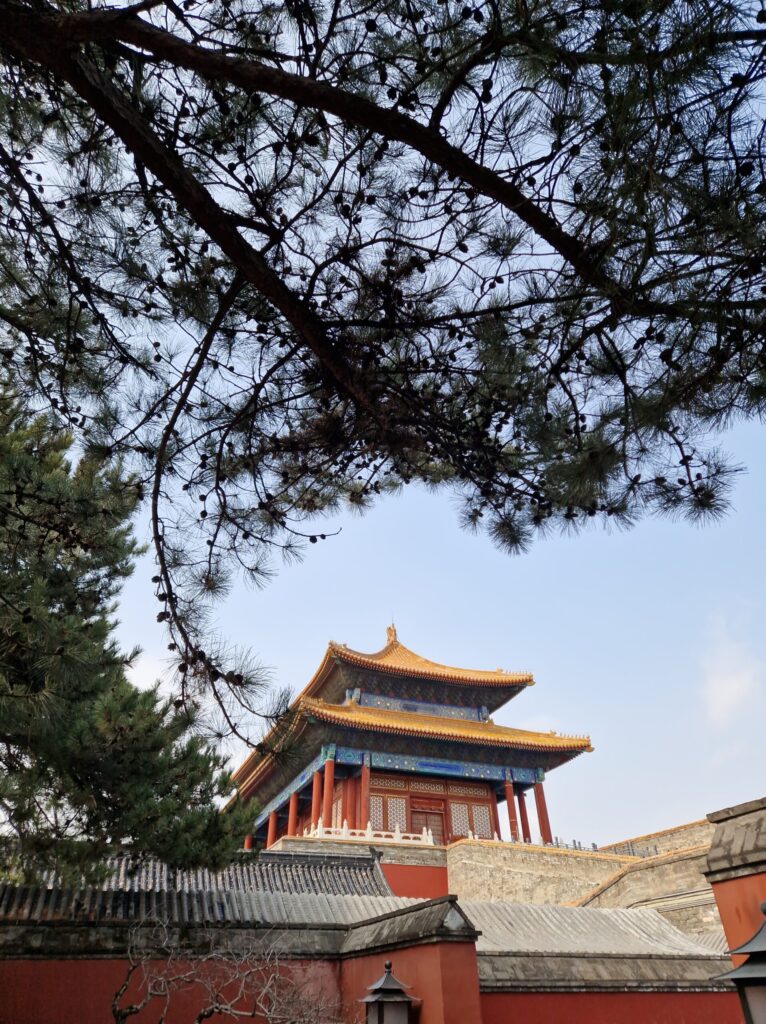
Now you’ve settled into Beijing life, today is going to be a little more hectic. We are starting early today with a tour of Tiananmen square and the Forbidden City. Tours typically begin around 8am, which helps miss a bit of the initial rush! This is an absolute must-do whilst in Beijing, and I really recommend doing a group tour. Attempting to get into Tiananmen Square without one is a real headache – it’s quite difficult to find your way in, queues are WAY longer, and there is very strict security.
I suggest booking at least a week in advance because spots can fill quickly, and it may get more expensive closer to the time. There are a lot of different tour options, I booked through GetYourGuide.com, but trip.com is also great. You want to look for a tour that offers Tiananmen Square and the forbidden city in one, and check the description to ensure tickets are INCLUDED.
Tiananmen Square is home to Mao’s mausoleum, which is NOT included in most tours of Tiananmen Square, so if this is something you are interested in you may have to book separately.
Be aware that Tiananmen Square has quite a dark past, and these events are HEAVILY censored in China. Its an incredibly sensitive topic, and there Chinese government is adamant on concealing what happened.
I was shocked by how big the Forbidden city was, and it’s definitely a bit of a challenge to navigate without a tour guide! My guide was very helpful in providing some back story on the different areas of the Forbidden city, and it was very interesting to learn about the purpose and functions of the different areas.
The tour will take approximately 4 hours, so you will be finishing up around lunch time, just in time to explore the surrounding Hutongs, and grab a delicious traditional meal! Whilst in Beijing it’s essential you try peking duck, and Beijing Hot Pot, both staples within the city.
Now you have a bit of time to play with, you can use this time to wander the traditional streets of the Hutongs, visit some of Beijings less known temples, or pay a visit to the Imperial Ancestral Temple, which is located very close by to the Forbidden city. Another great option is to visit Jingshan park, where you can climb the central hill for breathtaking views of the palace rooftops.
Day 3
It’s time, today we are visiting the Great Wall of China!
Before beginning my research, I had no idea that the Great Wall was made up of MANY different sections. I also had no comprehension of just how BIG it really is. It is (approximately) a whopping 21,196 km (13,171 miles)! What?! If you were to lay out all the branches of the Great Wall into one continuous line, it would stretch half way around the Earths Equator! That being said, some research is definitely needed beforehand, starting with…
Which section should you visit?
I chose to visit the Mutianyu section, after a bunch of research, but other popular sections include Badaling, Jinshanling and Simatai.
I would recommend doing a bit of research into each section before picking one, as it’s entirely dependant on what you value most from your trip. As a general insight, Badaling is the most tourist heavy section of the wall, it can get incredibly busy, but it is the easiest section to reach from Beijing – it is the most famous and accessible section.
The Mutianyu section is highly restored like Badaling, but less crowded, perfect if you want the classic Great Wall experience, without as many crowds. Fun fact, Mutianyu also features the cable car, chairlift and toboggan ride down, so its ideal for a unique memory from the Great Wall!
Jinshanling offers more of a ‘wild’ taste of the wall. It’s perfect if you’re a hiker or photography lover, as it’s a mixture of the restored but also the untouched. Despite being WAY more quiet than the 2 sections we have already mentioned, the one pitfall of visiting the Jinshanling section is that it is harder to reach, and it can be very steep.
Simatai is a very steep section of the wall, with some incredible views of the surrounding areas. The Gubei Water Town is at the base of the wall, which I have heard is pretty touristy, but could be a fun addition to your itinerary. It is a little further from Beijing as well, and may be a bit challenging to reach.
When to visit the wall?
My best advice would be to avoid visiting the wall in the peak winter time if possible. I didn’t realise just how bad of an idea that was before I made the mistake myself! Nothing could have prepared me for how icy the wall was when I went, to the point where you could barely move – and we saw a lot of blood.
Day 4
Summer Palace